SMB1001:2026

International Edition

United States of America (US) Flag
United Kingdom (UK) Flag
Canada (CA) Flag
Australia (AU) Flag
New Zealand (NZ) Flag
European Union (EU) Flag
Association of Southeast Asian Nations (ASEAN) Flag
Pacific Community (PAC) Flag
SMB1001:2026 Standard

A multi-tiered cybersecurity certification standard for small and medium-sized businesses.

Release date - 1 September 2025.

Read our License Agreement.

Map Locations

Dynamic Standards for a Dynamic World.

Our Mission

The SMB1001 cybersecurity standard provides a practical, cost-effective, and scalable solution specifically designed to meet the needs of small and medium-sized businesses (SMBs).

Offering an affordable, multi-tiered certification pathway, SMB1001 enables businesses to demonstrate their cybersecurity maturity while effectively addressing evolving threats.

Flexible & Multi-Tiered

Flexible & Multi-Tiered

Offers a flexible, tiered approach, allowing businesses to start at the right cybersecurity level based on their needs and resources.

Annually Updated

Annually Updated

Is regularly updated to ensure continued relevance in a rapidly changing threat landscape.

The Global Standard for SMBs

The Global Standard for SMBs

SMB1001 is a borderless security framework designed to provide a globally unified language of digital trust. Aligned to global best practices with practical accessibility, it empowers SMBs to scale and trade internationally with a universally recognized standard.

Supports Trusted Advisors

Supports Trusted Advisors

Supports IT providers and managed service providers (MSPs) by offering a consistent framework for cybersecurity certification.

Simplifies Supplier Assurance

Simplifies Supplier Assurance

Provides governments and large enterprises with confidence that SMB suppliers meet cybersecurity requirements.

What SMB1001 Offers

Why was SMB1001 developed?

SMB1001 was developed to bridge the gap between the critical need for digital defense and the practical limitations faced by smaller organizations. In today’s digital age, cybersecurity has shifted from a luxury to a necessity for small and medium-sized businesses (SMBs). The standard addresses three primary challenges:

Practicality and Cost: Traditional standards like ISO/IEC 27001 often require fully implemented management systems that demand significant financial and human resources, making them impractical for many SMBs.

Agility: While many certifications are only updated every few years, SMB1001 is designed to keep pace with a rapidly changing threat landscape to ensure businesses don't remain exposed to evolving risks.

Scalability: SMB1001 provides a flexible, multi-tiered pathway that allows businesses to improve their security maturity over time without losing the progress of their previous efforts.

Unlike regional or overly rigid frameworks, SMB1001 is uniquely designed for universal relevance. It stands as the only cybersecurity standard specifically tailored for SMBs that is globally applicable, providing a consistent language of trust for businesses operating in any market across the world.

What SMB1001 Offers.

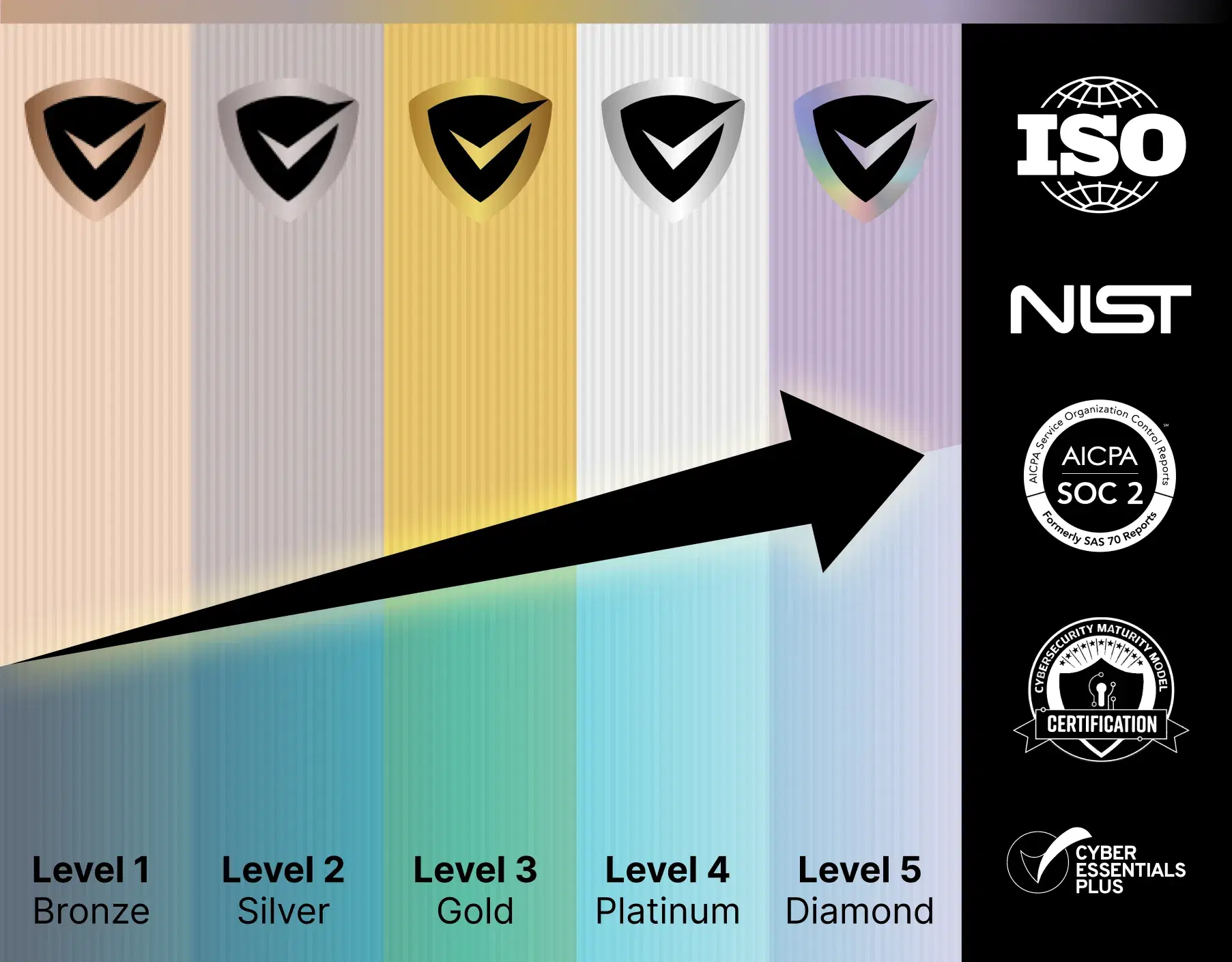
SMB1001 is a multi-tiered cybersecurity certification standard comprising five levels, each progressively increasing in complexity and maturity.

This structure allows SMBs to begin at the level that best matches their current context and cybersecurity posture. They are not required to complete all five levels, providing flexibility in how they approach their cybersecurity journey.

  • Level 1 focuses on establishing basic preventive controls, such as firewalls and antivirus software, to stop potential threats before they can harm your system.
  • Level 2 introduces more advanced preventive measures, adding layers of protection against more sophisticated threats.
  • Level 3 expands to a holistic risk management approach, where risks related to people, processes, and technology are identified, assessed, and addressed in a coordinated manner.
  • Levels 4 and 5 advance to more complex governance procedures. This involves formal rules and policies for managing cybersecurity, alongside best practices in risk management.
SMB1001 - The Five Tiers

SMB1001 makes cyber maturity progression affordable and achievable for SMBs.

Promoting uptake and adoption of many other frameworks.

Other Frameworks

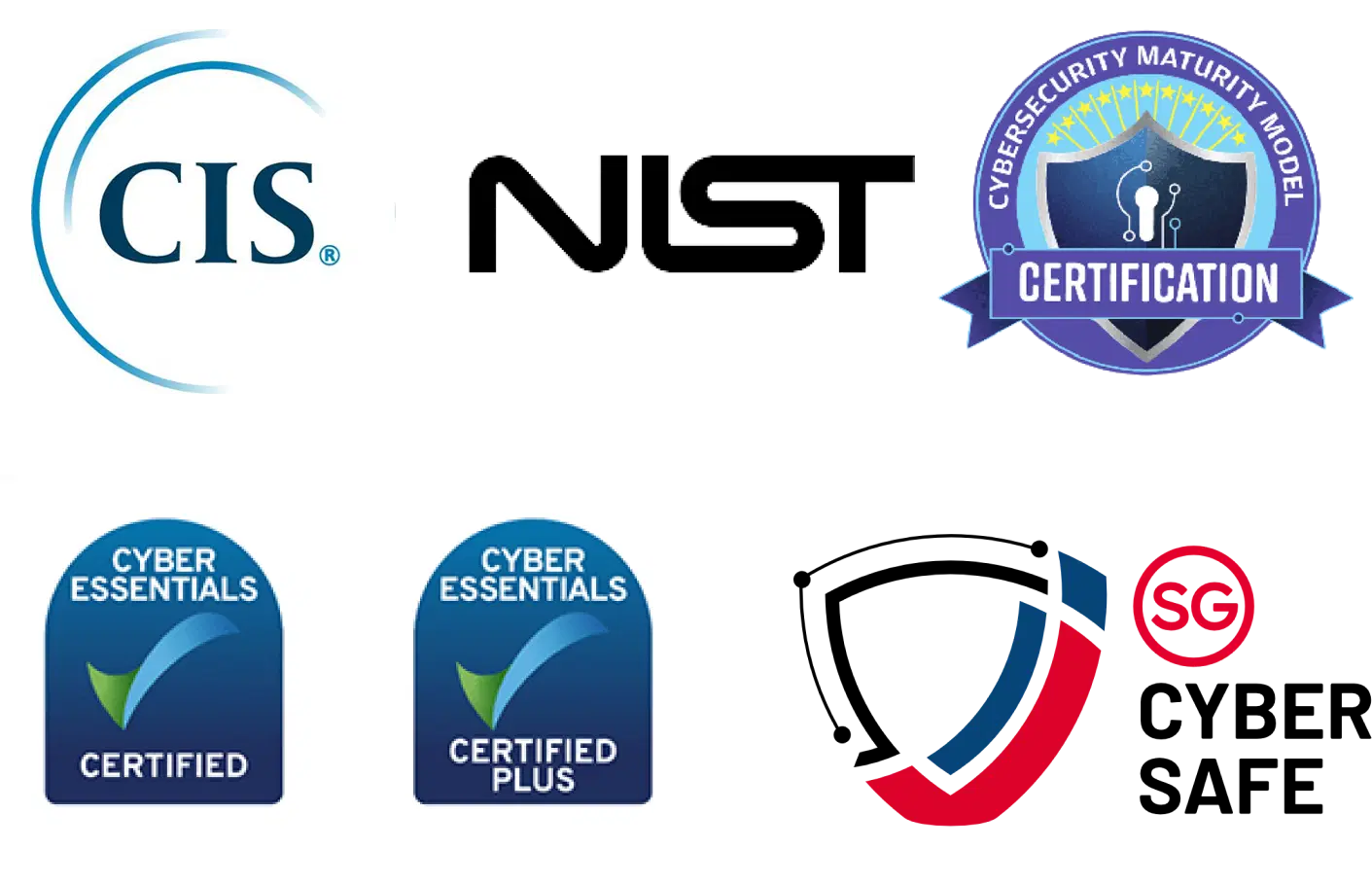
The logos used are trademarks of their respective owners.

SMB1001 has been mapped to and aligns with leading international guidelines, frameworks, and standards, such as the United Kingdom’s Cyber Essentials, and the United States’ CIS Controls and CMMC.

This means that SMBs who begin working towards the requirements of SMB1001 will also be starting their journey towards aligning with these globally recognized frameworks and standards.

Impact of SMB1001.

See how MSPs and IT Providers are using SMB1001 to streamline cyber certification, boost client trust, and build authentic cyber resilience.

CAP for MSPs
  • MyCISO
    Finally, a government approved cybersecurity framework that fits businesses of all sizes. SMB1001 makes cyber resilience achievable, demonstratable, and certifiable!

    Daniel Johns

    MyCISO

  • Catalytic IT
    The SMB1001 standard is a practical one that ensures an organization can showcase their progress towards a more secure oganisation. We’ve found the levels to be simple to follow, rewarding for organizations as they can easily follow their progression, and yet provides practical security uplift. We’re embedding the levels into strategic planning for...

    Michael Lester

    Catalytic IT

  • Assuredly
    Recognizing the need for a more accessible standard, Assuredly has embraced SMB1001, a new security standard/framework developed by DSI. Unlike its predecessors, SMB 1001 offers a pragmatic and tiered approach to security controls, enabling small businesses to achieve Tier 1 compliance swiftly and enhance their security measures over time. While we...

    Fiona Long

    Assuredly

  • Shadow IT
    At Shadow IT, we leverage the SMB1001 standard to small and medium-sized businesses (SMBs) due to it’s attainable, scalable, and robust cybersecurity controls. These controls facilitate the development of an internal framework for continuous improvement in cybersecurity maturity.

    Beau Dean

    Shadow IT

  • Aegis Cyber
    The SMB1001 certification provides a structured posture improvements to work towards where the client needs more than the ASD Essential 8 and they are not yet prepared (or required) to undertake ISO27001 or SOC 2. The increasing effectiveness and scope of controls being implemented can be undertaken in a cost- controlled manner allowing for the dep...

    Luke Irwin

    Aegis Cyber

  • Semaphore Consulting Partners
    At Semaphore Consulting Partners, we adopt the SMB1001 standard for small and medium-sized businesses (SMBs) due to its practicality and scalability compared to other existing standards in Australia, such as the Essential Eight or ISO/IEC 27001, which can be complex and challenging to implement and maintain. To further support SMBs in their cyberse...

    Arno Brok

    Semaphore Consulting Partners

  • TechPath
    The SMB1001 is a perfect solution for small to medium sized businesses being easy to understand and implement but also serves as an excellent way to build an organisations cyber resilience and then be able to demonstrate it.

    Troy Adams

    TechPath

  • SEQ IT
    We have a competitive edge in selling our IT security services by utilising the dynamic security standard SMB1001. The standard provides a clear, achievable roadmap for protecting our clients IT systems, using a non-complex language they understand.

    Michael Gibby

    SEQ IT

  • Huntress
    Historically it has been a challenge for SMBs to uplift their cybersecurity posture in a clear, affordable and effective way. DSI's SMB1001 solves this challenge by providing a standard which enables SMBs to baseline their cybersecurity posture against a clear and attainable set of controls, with a pathway to continuous improvement as they move thr...

    Reece Appleton

    Huntress

  • Process Ops
    I genuinely think that this is a fantastic solution to a huge problem in Australia and am a raving supporter! Thank you to you and your team for all the work you do to improve the security posture for the small business community.  

    Regan Vaudrey

    Process Ops

  • Brennan
    Brennan has adopted the SMB1001 framework as the benchmark for small to medium-sized businesses on their cybersecurity journey. The framework is flexible, pragmatic, and goes further than merely defining a one-size-fits-all control. This is a modern framework governed by some of the best minds in the industry and is constantly evolving in line with...

    Peter Soulsby

    Brennan

Understanding SMB1001 Controls.

People.

Process.

Technology.

SMB1001 is based on a ‘People, Process, Technology’ approach to managing cyber risk and cover five (5) core areas of focus.

Each of these areas is developed by considering common elements found in leading international cybersecurity guidelines and recommendations. These areas and their supporting controls also address common gaps and the “essential” controls recognized in global industry surveys.

This 5-tiered structure ensures that SMBs can build their cybersecurity gradually while meeting the demands of their clients and regulatory requirements. Within each level, SMBs address critical areas such as:

Technology Management

This involves overseeing and securing all technology assets within the business, such as hardware, software, and networks. Effective technology management ensures that systems are up to date, vulnerabilities are patched, and security configurations are properly maintained.

Access Management

Ensures that only authorized personnel have access to sensitive data and systems. This includes implementing strong password policies, introducing multi-factor authentication, and monitoring user activity to prevent unauthorized access.

Backup & Recovery

Regularly backing up critical data and having a recovery plan in place to restore systems after a cyber incident. Backup and recovery strategies are crucial for minimising downtime and data loss in the event of a breach or system failure.

Policies, Plans & Procedures

Establishing clear cybersecurity policies, procedures, and contingency plans. These define how the organization manages its cybersecurity risks, including how to respond to incidents and how to protect sensitive information.

Education & Training

Ongoing cybersecurity training for all employees to ensure they are aware of the latest threats and best practices. A well-informed workforce is a key line of defence in preventing security incidents caused by human error.

Fit-for-purpose for any industry.

Select the license option best for you.

For Individuals / Micro Business

Individual / Micro

1-20 employees

USD

$95.00

For Small Business

Small Business

21-200 employees

USD

$295.00

For Medium Business

Medium Business

201-1000 employees

USD

$595.00

For Enterprise

Enterprise

1000+ employees

USD

$995.00

For Government

Government

per department

USD

$995.00

For Commercial Use

Commercial Use

Within platforms for service delivery

USD

$995.00

Your purchase helps support the operational costs of managing the standard. Thank you. 🙏

Abstract

SMB1001 is a multi-tiered cybersecurity certification standard. This standard comprises of five tiers that support an organization in their journey of developing their cyber security hygiene.

SMB1001 provides organizations of any sector with guidance for developing their cybersecurity hygiene. This standard has a particular awareness of small and medium-sized businesses with their needs and resources being considered in the development of SMB1001.

Meeting the tiers of SMB1001 indicates that an organization has implemented good cybersecurity measures.

Adopting SMB1001 enables organizations to proactively manage the likelihood and impact of cyber threats, establishing a resilient security baseline. This robust foundation can then serve as a direct, streamlined path toward meeting the comprehensive requirements of ISO/IEC 27001.

SMB1001:2026 Standard

General Information

Status:

Published

Publication Date:

2025-09-01

Version:

1.0

Number of pages:

93

Certification Issuer (DSC):

Independent Verification Organizations (IVO):

BSI Group

InfoSecAssure

Frequently asked questions.

What is DSI?

DSI stands for Dynamic Standards International. We are a not-for-profit organization that develops dynamic cybersecurity standards to help small and medium-sized businesses (SMBs) improve their cybersecurity practices and protect their data.

What is SMB1001?

SMB1001 is a multi-tiered cybersecurity certification standard created by DSI globally for small and medium-sized businesses. SMB1001 helps these businesses improve their cybersecurity in a manageable and affordable way.

Why is cybersecurity important for SMBs?

Cybersecurity is crucial for SMBs because they are often targets of cyber-attacks. Good cybersecurity practices help protect sensitive data, ensure business continuity, and build trust with customers and partners.

How many levels are there in SMB1001?

There are five levels in the SMB1001 standard:

  • Level 1
  • Level 2
  • Level 3
  • Level 4
  • Level 5

Each level has specific requirements that help businesses progressively improve their cybersecurity.

What are the main areas covered by SMB1001?

SMB1001 covers five key areas:

1. Technology Management
2. Access Management
3. Backup and Recovery
4. Policies and Processes
5. Education and Training

What are the benefits of SMB1001?

  • A "Ticket to Trade" Globally: As the only globally applicable standard specifically for smaller organizations, it provides a universal language of trust that is recognized across borders, making it easier to compete for international contracts and tenders.
  • Strengthened Digital Defense: Implements practical, high-impact practices that safeguard your data and systems against evolving global cyber threats and scams.
  • Built-In Scalability: Its flexible, multi-tiered approach allows you to start at a level that fits your current resources and scale your security as your business grows.
  • Enhanced Partner Confidence: Provides large enterprises and government bodies with verified assurance that you meet rigorous, up-to-date security benchmarks, reducing risk across the entire supply chain.
  • Seamless Compliance Integration: While a robust standalone solution, SMB1001 is designed to align with broader international frameworks, serving as an optional stepping stone toward other global certifications if your business needs evolve.
  • Agile Protection: Unlike static certifications, SMB1001 is updated annually to ensure your defenses remain relevant in a rapidly shifting global threat landscape

How does SMB1001 compare to other cybersecurity standards?

SMB1001 is designed to be more affordable and easier for SMBs to adopt compared to enterprise-level standards such as ISO/IEC 27001. While ISO/IEC 27001 is the global benchmark for large-scale information security management, SMB1001 provides a practical and structured pathway for smaller organizations to gradually improve their cybersecurity maturity.

By aligning with the foundational requirements of international frameworks like the UK’s Cyber Essentials and the U.S. CIS Controls, SMB1001 allows businesses to build a robust security posture without the complexity and resource overhead typically associated with enterprise standards.

Where can I obtain certification for this Standard?

As the standard-setting body, Dynamic Standards International (DSI) maintains the integrity and development of the SMB1001 Standard but does not issue certifications directly. This ensures a transparent, third-party validation process consistent with international best practices.

Certification is managed by authorized Dynamic Standard Certifiers (DSCs). Currently, CyberCert is the official DSC for SMB1001. They provide the global digital platform required to assess your business and issue certification upon meeting the Standard’s requirements.

How does SMB1001 differ from other frameworks like ISO/IEC 27001?

Unlike traditional frameworks designed for large-scale enterprises, SMB1001 is purpose-built for the small and medium business ecosystem. While standards such as ISO/IEC 27001 or the US Cybersecurity Maturity Model Certification (CMMC) are often the benchmark for global corporations, they frequently include complexities and overhead that are not relevant or accessible for smaller organizations.

The SMB1001 Advantage:

  • Bespoke Design: Every control within SMB1001 is curated specifically for the SMB context, ensuring that security measures are impactful without being over-engineered.
  • Maturity Matching: Rather than a one-size-fits-all approach, SMB1001’s five levels are designed to align with where a business currently sits. Whether you are a micro-business or a growing mid-sized firm, you can achieve a level of certification that reflects your specific operational reality.
  • Accessibility: By removing the "enterprise noise," SMB1001 allows businesses to focus their resources on relevant protections, making robust cybersecurity achievable rather than aspirational.

The primary difference is intent. While enterprise standards aim for universal complexity, SMB1001 delivers a tiered, SMB-centric architecture that provides high-level security through a lens of practical business logic.


What are some basic requirements of Level 1 compliance?

For Level 1, businesses need to:

  • Engage a technical support specialist
  • Install and configure a firewall
  • Install antivirus software on all devices
  • Automatically install software updates and patches
  • Change passwords routinely
  • Implement a backup and recovery strategy for important digital assets